Christian SVG Design and the Work of Faith That Moves Mountains in Digital Creativity
When we talk about Christian SVG design, we are talking about more than just scalable vector graphics with crosses or doves. We are talking about a language of visual faith that can be embedded, shared, and scaled across websites, print materials, social media, and digital products. At the heart of this approach is a simple but profound idea: that thoughtful design can carry meaning, and that meaning, when tied to an active faith, can do powerful work. Many creators have adopted the phrase Faith Can Move Mou as a shorthand for that principle—a reminder that what we craft digitally can inspire real-world change when anchored in enduring belief.
This article explores how Christian SVG design functions as a creative and practical resource, how the concept of faith that moves mountains applies to the design process itself, and how you—whether you are a hobbyist, a business owner, or a ministry leader—can integrate these assets into your workflow effectively. We will look at the characteristics of SVG files, examine real-world use cases, discuss considerations for various audiences, and trace the journey of a design from inspiration to distribution. Throughout, the idea of a faith that actively shapes and transforms will remain central.
What Makes Christian SVG Design Distinctive
SVG stands for Scalable Vector Graphics, a format that uses mathematical paths rather than pixels to render images. This means that a single Christian SVG design can be resized from a tiny icon on a phone screen to a large banner on a sanctuary wall without losing clarity. For creators who work with faith-based imagery, this scalability is a significant advantage. A cross, a scripture verse rendered in decorative typography, or a symbolic image like a mountain or a mustard seed can be reused across countless formats without redrawing or re-exporting.
The Christian SVG design field includes a wide range of motifs: the Ichthys (fish), the Chi-Rho, the open Bible, the empty tomb, vines and branches, shepherd imagery, and of course, mountains. The mountain motif is particularly resonant because it ties directly to the biblical teaching that faith the size of a mustard seed can move mountains. This is where the phrase Faith Can Move Mou enters the visual conversation. Designers often render mountains in layered, stylized SVG paths, sometimes with text integrated into the landscape or with subtle gradients that suggest light breaking through. The result is an image that is both a literal depiction and a spiritual metaphor.
Attributes That Matter for Practical Use
- Resolution independence: SVGs look sharp at any size, which is ideal for both digital screens and large-format printing.
- Small file size: Complex illustrations can be stored in a few kilobytes, making them fast to load on websites and easy to share.
- Editability: Because SVGs are written in XML, anyone with a text editor or vector software can change colors, resize elements, or combine designs.
- Accessibility: Text within SVGs remains selectable and readable by screen readers when structured properly.
- Animation potential: With CSS or JavaScript, SVG elements can be animated, which opens doors for dynamic website headers or greeting card effects.
These attributes matter especially for faith-based projects. A church website that loads quickly and displays crisp imagery communicates professionalism and care. A printable bulletin or flyer that uses a single SVG motif can be produced at home or at a print shop without quality loss. A small business that sells Christian-themed merchandise can offer products with intricate vector art without worrying about pixelation at different print sizes.
How Faith Can Move Mou Shapes Creative Workflows
The phrase Faith Can Move Mou is more than a decorative slogan. For many designers and content creators, it functions as a guiding principle. It suggests that the creative process itself requires faith: faith that the design will come together, faith that the message will connect, and faith that the work matters even when the audience is small. In a world where digital content often feels disposable, embedding faith into SVG files gives them a layer of intention and permanence.
Consider a typical workflow for a Christian SVG design project:
- Conceptualization: The creator begins with a biblical theme or verse. For instance, the mountain-moving faith of Matthew 17:20. The visual direction emerges from meditation on the text.
- Sketching and path building: Using software like Adobe Illustrator, Inkscape, or Affinity Designer, the artist lays down vector paths. Mountains are drawn with sharp or rounded peaks, clouds are built with layered arcs, and typography is added using custom lettering or carefully chosen fonts.
- Export and optimization: The design is saved as an SVG file. The XML code is cleaned to remove unnecessary metadata, and elements are grouped logically so that users can later modify colors or hide layers.
- Integration into a project: The SVG is placed into a website, a sermon slide, a printable coloring page, or a product mockup. Because the file is code, it can be embedded directly into HTML or loaded as an asset.
- Distribution: The design is shared with a congregation, posted on a blog, added to a digital store, or given away as a free resource. The mountain-moving message travels with it.
This workflow shows that Christian SVG design is not just about the end product but about the process. Each step involves decisions that reflect the designer's understanding of both craft and faith. The markup itself becomes a kind of testimony, with paths that encode meaning and layers that reveal depth.
Audiences and Use Cases Across the Spectrum
One of the strengths of Christian SVG design is its versatility across different types of users. Below are several audience segments and how they benefit from this format.
Ministry Leaders and Educators
Pastors, Sunday school teachers, and youth group leaders often need visual aids that communicate quickly and clearly. An SVG of a mountain with the text Faith Can Move Mou can be projected during a sermon, printed for a handout, or used as a social media graphic. Because the file is editable, the leader can change the verse reference or adapt the color palette to match a series theme. Educators appreciate that SVGs can be imported into presentation software without formatting issues.
Small Business Owners and Creators
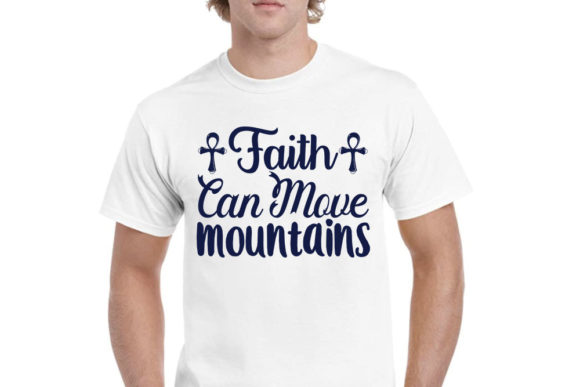
An entrepreneur selling Christian-themed apparel, home decor, or printables relies on high-quality assets that differentiate their brand. SVG designs allow them to offer products with intricate artwork that stays crisp no matter the size. A t-shirt design featuring layered mountains and the phrase Faith Can Move Mou can be screen-printed or heat-pressed with confidence. Digital product sellers also benefit because SVGs can be bundled and sold as cutting machine files (for Cricut or Silhouette), expanding the market reach.
Professional Designers and Agencies
Graphic designers who serve faith-based clients need a reliable library of vector assets. Having a collection of well-constructed Christian SVG design files saves time and ensures consistency. Designers can incorporate these elements into branding projects, website layouts, or publication designs. The ability to animate SVGs opens additional possibilities for digital campaigns or motion graphics used in online services.
Hobbyists and Home Users
Many people enjoy creating personalized gifts or decorations for their homes. Christian SVG files give hobbyists the ability to craft wall art, greeting cards, or custom mugs without needing advanced drawing skills. A simple search for a mountain-themed SVG with the text Faith Can Move Mou yields files that can be resized, recolored, and printed on demand. The accessibility of the format makes it easy for non-designers to produce professional-looking results.
Educational and Research Contexts
Researchers studying the intersection of religion and visual culture can examine SVGs as artifacts of contemporary faith expression. The format's structure allows for analysis of how biblical metaphors are translated into scalable geometry. Educators in digital arts programs might use Christian SVG design as a case study for teaching vector graphics, accessibility, and semantic markup.
Advantages That Go Beyond Pixel Count
The technical benefits of SVG are well documented, but when applied to Christian content, they take on additional significance.
Longevity: SVG is an open standard that has been supported for decades. A design created today will still open in browsers and software ten or twenty years from now. For ministries or organizations that want to build a lasting visual library, this is a wise investment. The faith message encoded in the design can continue to be used as the organization grows.
Internationalization: Because SVGs can include text as actual text rather than as rasterized shapes, they can be localized for different languages. A mountain-themed design with the words Faith Can Move Mou in English can be translated into Spanish, French, Mandarin, or Swahili by simply editing the XML. This makes the same design usable across global congregations.
Community and Sharing: The Christian design community has developed a culture of sharing SVG resources. Many creators offer free designs for personal or ministry use. This generosity reflects the ethos of faith in action—giving away something that can be used to encourage others. A single Christian SVG design file can be shared hundreds of times, each instance carrying the same message of hope.
Integration with Modern Web Standards: Websites that embed SVGs benefit from faster load times, better SEO (since search engines can read the text within SVGs), and responsive layouts. For churches or ministries that rely on their online presence to reach new people, this is a practical way to improve user experience while keeping the visual message consistent.
Considerations When Working with Christian SVG Files
Despite the many advantages, there are important considerations to keep in mind.
Licensing and Attribution: Not all SVGs are free for commercial use. Designers and businesses must check the license terms for any asset they download or purchase. Some creators require attribution, while others prohibit certain uses. Respecting these terms is part of operating with integrity—a value that aligns with the faith themes the designs represent.
Semantic Markup and Accessibility: A well-crafted SVG includes titles, descriptions, and proper grouping. When the phrase Faith Can Move Mou appears, it should be coded as text rather than as a path of curves, so that screen readers can read it aloud. Designers who prioritize accessibility ensure that the message reaches everyone, including those with visual impairments.
Cultural Sensitivity: Christian symbolism varies across denominations and cultures. A design that resonates with one community might feel out of place in another. When using mountain imagery to represent faith, it's worth considering the local context. In some regions, mountains are associated with obstacles; in others, with refuge. The designer's awareness of these nuances can make the difference between a design that connects and one that confuses.
File Optimization: Not all SVG files are created equal. Some contain bloated code from export tools that over-complicate the paths. Optimizing the SVG—removing unused groups, combining paths where appropriate, and reducing decimal precision—can shrink file size and improve rendering speed. Tools like SVGO or manual cleanup in a code editor are valuable steps before final use.
Observing the Impact of Faith-Driven Design
In practice, Christian SVG design has found a home in contexts ranging from high-end publications to grassroots social media campaigns. A small community church might use a single mountain SVG as the recurring visual theme for a sermon series on faith. A large ministry might commission a custom set of SVGs for their app and website, creating a cohesive brand that communicates depth and stability. An independent artist might sell printable wall art featuring layered mountains and the phrase Faith Can Move Mou, helping families decorate their homes with daily reminders of spiritual truth.
What unites these examples is the conviction that design can carry meaning beyond decoration. The vector paths are not just lines; they are articulations of belief. When a person downloads an SVG and uses it to create something for their home or ministry, they are participating in a chain of creation that began with an idea of faith. The mountain in the design becomes a visual anchor for the promise that obstacles can be overcome.
The phrase Faith Can Move Mou itself has become a kind of shorthand within certain design communities. It appears in social media hashtags, in product descriptions, and in the alt text of images. Designers use it to signal the intended spirit of the work. Users search for it when they want a design that speaks directly to the core of their beliefs. It has evolved from a simple phrase into a category marker that tells the audience what to expect: honest, scalable, aesthetically thoughtful Christian imagery that aims to encourage and strengthen.
Looking at Trends and the Future of Christian Vector Art
As digital tools become more accessible, the barrier to creating Christian SVG design continues to drop. Free and open-source vector editors like Inkscape put professional-grade capabilities in anyone's hands. Online marketplaces have made it possible for designers to share or sell their work globally. At the same time, the demand for authentic, high-quality faith-based content is growing. People are looking for images that feel genuine rather than generic, and SVG offers the flexibility to customize and personalize.
We are also seeing increased interest in motion and interactivity. An SVG of a mountain can be animated to show clouds drifting or light rising from behind the peaks. A design that includes the text Faith Can Move Mou can be programmed to appear with a gentle fade. These dynamic elements are especially effective in digital worship environments, where the visual experience complements the spoken message.
Another trend is collaboration. Designers from different backgrounds are pooling their skills to create comprehensive libraries of Christian SVGs that cover a wide range of themes—from Advent and Easter to everyday encouragement. These libraries are being used by churches, schools, and individuals who want consistent, high-quality visuals without starting from scratch each time. The cooperative nature of these projects itself reflects the idea that faith, when shared, multiplies its impact.
For business owners and entrepreneurs, the opportunity lies in niche specialization. A shop that offers minimalist mountain-focused Christian SVGs with the phrase Faith Can Move Mou can build a loyal customer base by consistently delivering designs that speak to a specific need. For educators and researchers, the format offers a rich field of study: how do digital vectors carry spiritual meaning? How do users interact with and adapt these files? The answers are still unfolding.
Bringing It All Together
Whether you are a designer crafting your first SVG, a pastor preparing slides for Sunday, a small business owner creating products with purpose, or a hobbyist who wants to decorate your home with reminders of faith, Christian SVG design provides a flexible, future-proof medium. The mountain motif, paired with the anchor phrase Faith Can Move Mou, encapsulates a truth that has inspired believers for millennia: that belief, even when it seems small, can reshape the landscape of our lives.
In practical terms, this means choosing SVG over other formats when quality and longevity matter. It means learning the basics of vector editing so that you can adapt designs to your exact needs. It means respecting the work of other creators and contributing your own designs to the community when possible. And above all, it means remembering that every line, every curve, and every color choice is an opportunity to communicate something enduring.
The power of these designs is not in the pixels or the paths themselves, but in what they point to. A mountain rendered in SVG code can be infinitely scaled, but the faith it represents is not meant to stay in a file. It is meant to be seen, shared, and lived. When you use a Christian SVG design, you are continuing a tradition of visual storytelling that connects the digital present to the ancient promise that faith can indeed move mountains.