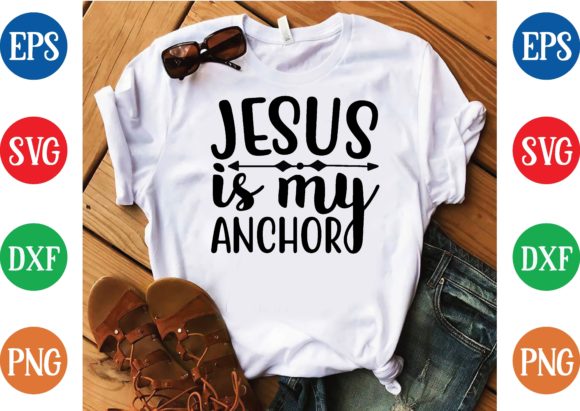
Jesus is My Anchor SVG Design: Choosing, Using, and Applying with Purpose
If you have searched for “Jesus is My Anchor SVG design,” you likely have something specific in mind—a faith-themed project for a shirt, a wall decal, a mug, or a digital gift. The phrase itself carries deep meaning: a reminder of spiritual stability in uncertain times. The SVG format makes it easy to scale, customize, and use across many materials. Yet many people end up with results that fall short of what they imagined. The problem is rarely a lack of creativity. It is usually a handful of avoidable missteps in how the design is chosen, handled, or applied. Let’s walk through those pitfalls and explore better ways to work with this design so your finished piece matches the intention behind the message.
Mistaking a Design File for a Finished Product
A common misunderstanding is that an SVG file is ready to use exactly as downloaded. An SVG is a vector file—it defines shapes, lines, and colors mathematically. It is not a print-ready image or a cut file that will work perfectly on every machine. If you open it and send it straight to a printer or cutter without checking, you may get unexpected sizes, missing elements, or distorted text.
Before you use any Jesus is My Anchor SVG design, open it in vector editing software such as Inkscape, Adobe Illustrator, or a free online viewer. Verify that all layers are intact, that the anchor graphic is properly grouped, and that the text is converted to outlines if you plan to share the file with others. Converting text to outlines prevents font substitution issues—someone else opening the file won’t see missing fonts or misaligned letters.
If you are using the design for a cutting machine like a Cricut or Silhouette, check that the file has separate cut lines and that there are no hidden open paths. A tiny gap in the anchor’s curve can cause the machine to cut a jagged edge instead of a smooth line. Taking five minutes to inspect the file saves you from wasting material later.
Overlooking File Format and Resolution Requirements
Not all SVG files are created equal. Some are poorly exported from low-resolution sources, leaving them with unnecessary nodes or jagged curves. Others may be saved in a format that your software interprets incorrectly. If you see rough edges on the anchor or inconsistent spacing in the lettering, the issue is often in how the file was generated rather than in the original design itself.
When you download or purchase a Jesus is My Anchor SVG design, look for files that are cleanly constructed. Check the node count if you have access to editing tools—too many nodes can slow down your software and create cutting errors. Also confirm that the file uses standard SVG syntax. Some sellers provide files that are actually PNG images embedded inside an SVG wrapper. Those look fine on screen but fail when you try to cut or resize them because they are not true vectors.
If you receive a file that feels off, try opening it in a different program. A file that looks fine in a web browser may reveal problems in your cutting software. Test with a small scrap piece of material before committing to your final project. That quick test can reveal alignment issues, broken paths, or text that needs to be re-kerned.
Ignoring the Importance of Anchor and Text Proportion
The anchor is the central visual element in this design. It carries symbolic weight and sets the tone for the whole piece. If the anchor is too small relative to the text, the message feels unbalanced. If the anchor is too large or overly detailed, the text becomes an afterthought. Getting the proportion right is more important than picking the fanciest anchor graphic.
Look for a design where the anchor and the words work together as one composition. The anchor should be recognizable at a glance—its shape, crossbar, ring, and flukes should be clear even when scaled down. Avoid designs where the anchor is so ornate that it reads as a blob of lines from a distance. Simple, bold anchor silhouettes often communicate the message more effectively than intricate ones, especially on apparel or small items like keychains.
If you are combining the SVG with other elements—scripture references, decorative borders, or additional symbols—leave enough breathing room. Crowding the anchor with too many extras dilutes the impact. Let the anchor and the phrase be the focal points. Everything else should support them, not compete for attention.
Choosing Poor Color Combinations and Materials
Color choices can make or break a faith-based design. The phrase “Jesus is My Anchor” evokes feelings of stability, hope, and reassurance. Colors that are too harsh or that clash with the material you are applying the design to can undermine that feeling. A neon orange anchor on a bright yellow shirt may grab attention, but it probably won't convey the grounded, peaceful sentiment the message intends.
Think about the context. For a t-shirt or hoodie, classic combinations like navy blue anchor on a soft gray background, or white lettering on a deep teal fabric, tend to feel timeless and readable. For home decor, consider the wall color and the room’s lighting. A dark anchor on a dark wall disappears. A metallic gold or silver vinyl catch the light nicely and adds a subtle, meaningful highlight.
Also consider the material’s texture. On a rough canvas tote bag, fine details can get lost. On a smooth ceramic mug, thin lines can look elegant. Match the complexity of the SVG design to the surface you are applying it to. If you are unsure, do a small test piece on a similar material. That step alone prevents disappointment and wasted supplies.
Misunderstanding Licensing and Usage Rights
This point often gets overlooked until it causes trouble. Many Jesus is My Anchor SVG designs are sold or offered freely with specific licenses. Some allow personal use only. Others permit small business use. A few even allow commercial use with attribution. The license determines what you can legally do with the file—and that matters whether you are making one shirt for yourself or selling twenty at a craft fair.
If you plan to use the design for anything beyond a personal project, check the license before you download or purchase. Read the terms even if they seem long. Some licenses restrict the number of items you can produce, require you to purchase an extended license for larger quantities, or forbid using the design in digital products like templates or printables.
Respecting licensing keeps your projects ethical and avoids potential disputes. If you need a design for a business, look for sellers who clearly state commercial terms. Many independent creators offer affordable extended licenses that give you the freedom to use their work without worry. That small investment also supports artists who pour time into making clean, high-quality vector files.
Skipping the Proof and Not Customizing the Design
Another frequent error is applying a design exactly as downloaded without adjusting it for your specific use case. Maybe the text color clashes with the shirt you bought. Maybe the anchor’s orientation looks odd on a tote bag. Perhaps the font feels too formal for the casual hoodie you have in mind. These are easy fixes that many people skip because they assume the file is final.
Take the time to customize the SVG to fit your project. Change the colors to match your palette. Adjust the size so the anchor sits comfortably on the item. If the text is too long or too short for the space, rework the layout. Swap out the font if you have a license for a typeface that better matches your style. Most vector editors make these changes straightforward, and the effort separates a mediocre final product from one that feels intentional and polished.
For example, imagine you are making a gift for a friend who loves nautical decor. The original design has the anchor with a thick outline and bold sans-serif text. By changing the text to a gentle script font and adjusting the anchor to a slightly weathered style, you create a piece that feels personal rather than generic. That small customization shows care and yields a result worth keeping.
Neglecting Test Cuts and Print Samples
It is tempting to load your cutting machine or send your file to the printer and hope for the best. But even the best SVG design can fail if your machine settings are off or if the printer interprets colors differently. A test cut on scrap material reveals if the anchor’s curves are cutting cleanly, if the text is readable at your chosen size, and if the overall composition fits the item.
Print a small sample on paper before committing to fabric or vinyl. Check the alignment, the spacing, and the visual weight. If you are using heat transfer vinyl, test the temperature and pressure on a scrap piece of the same fabric. Adjust your settings until the cut and transfer are clean. That extra twenty minutes of testing can save you from ruining a shirt or a set of mugs.
Focusing on the Design Instead of the Message
Finally, remember that the SVG design is a tool for communicating something meaningful. The anchor symbolizes hope, stability, and faith. If the design distracts from that message—through excessive embellishment, poor readability, or a style that doesn’t match the sentiment—the project loses its purpose.
Choose a Jesus is My Anchor SVG design that resonates with you and fits the person or space it is intended for. Let the design serve the message, not the other way around. When you align the visual choices with the meaning behind the words, the result carries more weight. It becomes something people notice, appreciate, and remember.