Using Cupcakes and Jesus SVG in Your Creative Workflow
SVG files have become a staple for creators who work with cutting machines, digital design software, and print-on-demand platforms. Among the many thematic options available, the Cupcakes and Jesus SVG stands out as a niche but meaningful design that blends faith-based messaging with a playful, welcoming visual. Whether you are a small business owner creating custom merchandise, a hobbyist looking for meaningful projects, or a content producer building a cohesive visual brand, understanding how to integrate this type of SVG into your process can save time, reduce waste, and improve the consistency of your output.
This article walks through what Cupcakes and Jesus SVG files are, where they fit in a broader workflow, and how you can use them before, during, and after your projects. You will learn practical implementation strategies, compatibility considerations, and long-term organization tips that help you get the most out of every file.
Understanding Cupcakes and Jesus SVG: More Than a Simple Graphic
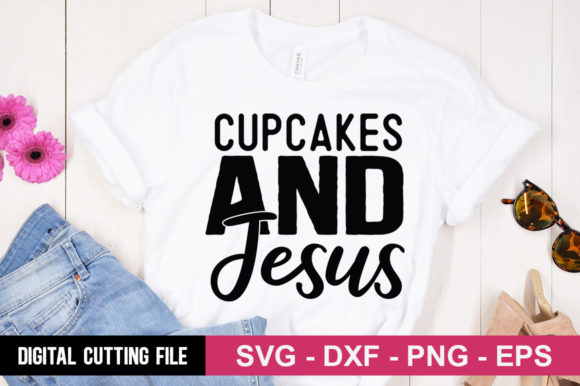
A Cupcakes and Jesus SVG is a vector graphic that typically combines a cupcake illustration with faith-centered text or imagery. The design often leans on a casual, approachable aesthetic—think whimsical fonts, soft colors, and a tone that feels both devotional and lighthearted. This makes it especially popular for church groups, faith-based small businesses, and creators who want to offer products that resonate with a specific audience without feeling overly formal.
What makes this SVG different from a raster image is its scalability and editability. Because SVG files are vector-based, you can resize them without losing quality, change individual elements, and reassign colors to suit your project. This flexibility is essential when you are working across multiple formats—like a t-shirt design, a greeting card, and a social media graphic—all from a single source file.
In a practical sense, the Cupcakes and Jesus SVG functions as both a standalone design and a modular component. You might use it as the centerpiece of a product, or you might extract the cupcake graphic for use in a separate layout. Understanding this dual role helps you think strategically about when and how to bring it into your workflow.
Where Cupcakes and Jesus SVG Fits in Your Process
Every creative project follows some version of a lifecycle: planning, preparation, execution, and review. The Cupcakes and Jesus SVG can serve a purpose at each stage, but the most effective use comes when you treat it as part of a broader system rather than a one-off asset.
During the planning phase, you might browse the SVG to assess whether its style aligns with your current project goals. For example, if you are building a product line for a church fundraiser, a Cupcakes and Jesus SVG can set the visual tone early. You can sketch out layouts, choose complementary colors, and decide on product formats before you ever open your design software. This upfront clarity reduces the back-and-forth editing later.
In the preparation stage, you will import the SVG into your chosen platform—whether that is Adobe Illustrator, Inkscape, Cricut Design Space, Silhouette Studio, or a web-based tool like Canva. At this point, you can ungroup the elements, rename layers, and adjust the design to fit your exact dimensions. Preparation also involves checking the file for stray nodes, overlapping paths, or embedded fonts that might cause issues during cutting or printing. Taking ten minutes to clean up the SVG upfront prevents delays when you are in the middle of production.
During execution, the Cupcakes and Jesus SVG becomes the active asset you manipulate. You might resize it for a mug wrap, adjust the contrast for a heat transfer, or combine it with other graphics to build a multi-layered composition. Because the file is vector-based, you can scale it from a small iron-on patch to a large banner without losing sharpness. This is especially useful if you run a print-on-demand shop where product dimensions vary widely.
After the project is complete, the SVG file becomes part of your asset library. A well-organized library lets you reuse the design for different purposes—perhaps a Cupcakes and Jesus SVG originally purchased for a t-shirt design later becomes the basis for a sticker set, a social media post, or a digital invitation. By saving the edited version alongside the original, you preserve both the raw materials and your finished work.
How Cupcakes and Jesus SVG Interacts with Tools and Platforms
No SVG exists in isolation. How you use the Cupcakes and Jesus SVG depends heavily on the tools you have and the output you need. Understanding compatibility early in your workflow prevents frustration and wasted effort.
If you are using a cutting machine like a Cricut or Silhouette, the SVG must be cleanly structured with closed paths and no stray lines. Many Cupcakes and Jesus SVG files come pre-optimized for these machines, but it is still worth opening the file in a vector editor first to verify. Look for layers that might cause the machine to cut unnecessarily, such as tiny decorative dots or thin lines that will not transfer well. Deleting or simplifying these elements before you cut saves material and time.
For digital use, such as social media graphics or website images, the SVG can be imported directly into Canva, Figma, or similar platforms. Keep in mind that some free-tier tools limit SVG functionality—you may need to convert the file to PNG for certain applications. If you anticipate reusing the design across multiple digital formats, maintain a master SVG and export derivatives as needed. This way, your source file remains editable while you generate raster copies for quick upload.
Print-on-demand users benefit from keeping a layered version of the Cupcakes and Jesus SVG. When you sell products through services like Printful or Redbubble, you often need to adjust the design for different mockups or product templates. A layered SVG lets you hide the background, change the text color, or reposition the cupcake element without starting over. This modular approach speeds up your listing creation and helps you maintain a cohesive brand across multiple products.
Practical Implementation Tips for Better Results
Getting a great outcome from Cupcakes and Jesus SVG is less about magic and more about consistent habits. Below are specific practices that experienced creators use to integrate these files smoothly into their routines.
- Create a naming convention. Instead of saving files as cupcakes-jesus.svg, add metadata to the filename: color variant, dimensions, or project name. For example, cupcakes-jesus_black-gold_12x12.svg makes future searches fast.
- Maintain a backup of the original. Store the untouched SVG in a folder separate from your working files. If you edit the file and later want to start fresh, you have the original to fall back on.
- Test cuts and prints on scrap material. Before committing to a final product, run a sample using the same material you plan to use. This is especially important with heat transfer vinyl or specialty papers, where color and texture affect the final appearance.
- Check font licensing. Some Cupcakes and Jesus SVGs include embedded fonts. If you plan to edit the text, make sure you own or have rights to the font used. Otherwise, the design may default to a generic typeface that disrupts the look.
- Use color swatches for consistency. If you produce multiple items with the same design, save the exact hex codes or color mix values. This ensures the cupcake frosting or background shading matches across a t-shirt, a tote bag, and a sticker.
- Layer intelligently. When working in software that supports layers, separate text, graphic elements, and background into distinct groups. This allows you to isolate parts of the design for resizing or recoloring without affecting the whole composition.
Workflow Examples: From Idea to Finished Product
Seeing how the Cupcakes and Jesus SVG performs in real scenarios makes the process concrete. Below are two workflow examples that show different entry points depending on your role.
Example 1: A small business owner preparing for a church event.
You are creating merchandise for a youth group bake sale with a faith-based theme. You purchase a Cupcakes and Jesus SVG and start by opening it in Illustrator to verify the artwork. The file contains a cupcake with a cross detail on the icing and the phrase “Cupcakes & Jesus” in a rounded script. You ungroup the layers, rename them to “cupcake,” “cross,” and “text,” then adjust the colors to match the event palette—soft pink and navy. From this single SVG, you export a PNG for flyers, a DXF for vinyl cutting, and a layered PDF for screen printing. The preparation takes thirty minutes, but the output covers three product lines: iron-on tees, stickers, and printed banners. By doing the editing once, you eliminate redundant work later.
Example 2: A content creator building a consistent visual brand.
You run a blog and social media account focused on faith and family, and you want a recurring visual motif. You choose the Cupcakes and Jesus SVG as your header graphic. Using Canva, you upload the SVG and create template versions for Instagram posts, YouTube thumbnails, and email headers. Because the SVG is vector-based, you can resize it without degradation. You set up a brand folder with the SVG, a color palette extracted from the file, and a style guide that references the cupcake element. Every time you create new content, you pull from that folder. This approach creates visual continuity across platforms and reduces the time spent designing from scratch each week.
Organization, Quality Control, and Long-Term Use
An SVG file like Cupcakes and Jesus is only valuable if you can find it when you need it and trust that it will work correctly. Organization might not feel creative, but it directly impacts your efficiency and output quality.
Set up a folder structure that separates raw files from edited versions. Inside your main SVG folder, create subfolders for original purchases, in-progress edits, and finalized projects. If you collect multiple Cupcakes and Jesus SVGs from different designers, tag or annotate each file with its style characteristics—hand-lettered, minimalist, colorful, monochrome, etc. This makes searching faster when you have hundreds of assets.
Quality control should become a habit every time you download a new SVG. Open it in a vector editor and check for common issues: stray anchor points, overlapping shapes that won't cut cleanly, or embedded fonts that may not render on other machines. Fixing these at the download stage is far easier than troubleshooting during a production run. If the file is from a marketplace with user reviews, check for comments about construction and compatibility before purchasing.
For long-term use, think about versioning. If you modify the Cupcakes and Jesus SVG for a specific project, save it as a new file with a version number or date. This preserves your original and gives you a history of changes. If you later need to revert or adapt an earlier version, the history is there. Over time, your library becomes a resource you can mine for new campaigns, seasonal products, or one-off commissions without starting over.
Adapting the Workflow for Conceptual or Niche Topics
Not every project follows a strict step-by-step process. If you are using Cupcakes and Jesus SVG for a more conceptual purpose—like a personal journal cover, a gift for a friend, or a piece of wall art for your home—the workflow still applies, but it is lighter. You still prepare the file, check compatibility with your material, and organize the asset afterward. The difference is scale and frequency. Low-volume projects benefit from the same preparation habits because they reduce waste and ensure the finished piece looks polished.
Creators who work in faith-based niches often find that Cupcakes and Jesus SVG fills a gap between overly serious religious imagery and purely secular designs. It allows them to connect with an audience that appreciates humor, warmth, and approachable faith expression. By treating the SVG as a reusable asset rather than a one-time file, you build a visual toolkit that grows more valuable with each project.
Whether you are producing for sale, for community, or for personal satisfaction, the principles remain the same: prepare carefully, test before committing, and organize for reuse. A Cupcakes and Jesus SVG is a small piece of a larger creative system, but when handled well, it contributes to consistency, efficiency, and a final product that resonates with the people who see it.