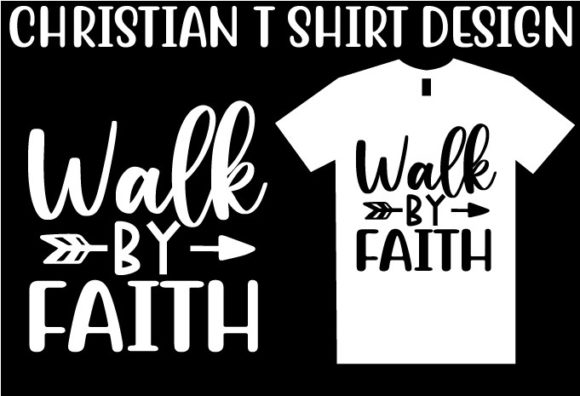
Christian SVG T Shirt Design as a Creative Workflow Tool
Christian SVG T Shirt Design sits at a particular intersection—where faith-based messaging meets practical, scalable production. For designers, small business owners, and content creators who work with apparel, this format offers a repeatable, predictable way to produce custom garments without reinventing the production pipeline each time. Rather than treating each design as a one-off, working with SVG files allows you to build a library of assets that can be reused, adapted, and deployed across multiple projects with minimal friction.
The real value of Christian SVG T Shirt Design is not just in the final printed shirt. It lies in how the format integrates into a broader workflow—from initial concept to production to fulfillment. Understanding where SVG files fit in that chain helps you make smarter decisions about preparation, organization, and long-term asset management.
Understanding Christian SVG T Shirt Design in Context
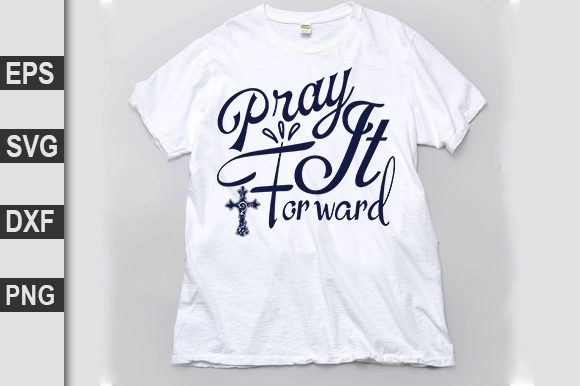
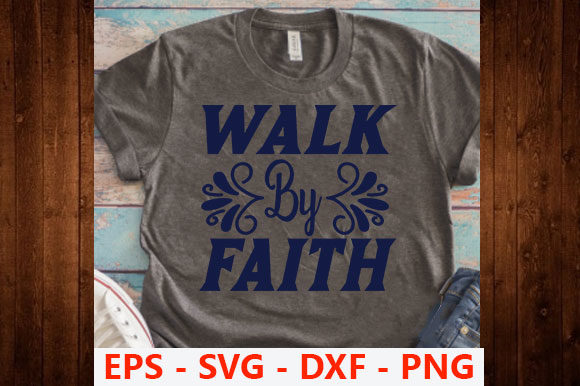
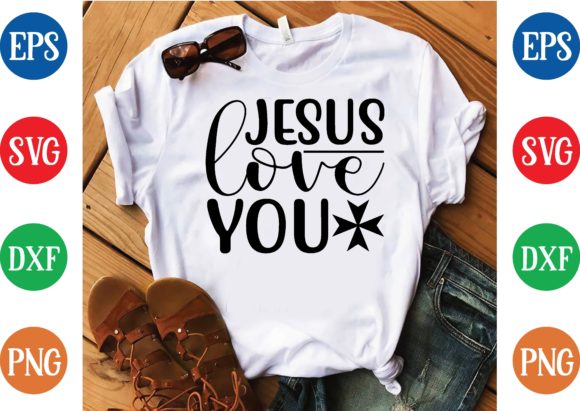
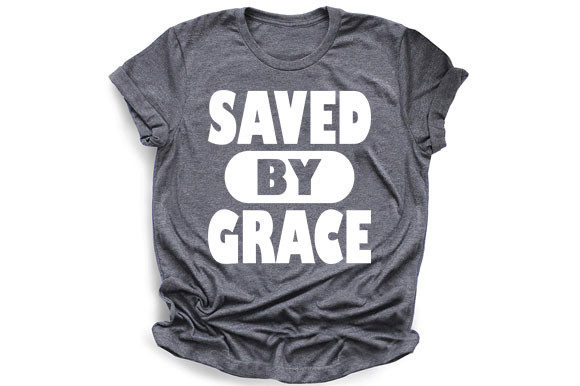
An SVG—scalable vector graphic—is a file format that describes images using mathematical paths rather than pixels. This means the design remains crisp at any size, from a small pocket print to a large back graphic. When applied to Christian T-shirt design, the format becomes a container for crosses, scripture references, dove imagery, hand-lettered verses, or abstract symbols of faith. Because SVG files are editable in most vector software, you can open a design, adjust colors, resize elements, or combine multiple graphics into a single layout without losing quality.
This matters for anyone producing Christian-themed apparel in volume. Whether you are running a small print-on-demand store, designing for a church group, or building a brand around faith-based apparel, SVG files give you a consistent starting point. You are not starting from scratch every time. Instead, you are working from a modular system where each design element can be swapped, layered, or repurposed across different products.
From a workflow perspective, Christian SVG T Shirt Design sits between the ideation phase and the production phase. Once you have settled on a concept, the SVG file is the executable version of that idea—it is what you send to a printer, upload to a print-on-demand platform, or convert into a cut file for heat transfer. Getting that file right saves time downstream and reduces error rates in production.
Where Christian SVG T Shirt Design Fits in a Project Timeline
If you map out a typical apparel design project, Christian SVG T Shirt Design appears at multiple stages, each with a different purpose.
Before the project begins. When you are planning a collection or a single design, SVG assets can serve as reference materials. You can browse existing designs, study how elements are arranged, and decide on a visual direction before you open your own software. This is especially useful if you are new to vector design—seeing how established designers handle composition, color, and typography inside an SVG file gives you a template for your own work. You can also test how a design will look at different sizes by scaling the file in a viewer, which helps you make early decisions about layout orientation and element placement.
During the design phase. This is where SVG files earn their keep. Because they are editable, you can take a base design and customize it for different products or audiences. Perhaps you have a central cross graphic. For one shirt, you pair it with a scripture reference. For another, you add a simple halo effect. For a third, you invert the colors for a dark background. Each variation takes minutes rather than hours because the core SVG structure remains intact. You are iterating on a live file rather than rebuilding from scratch.
After production. Once a design has been printed, the SVG file remains useful. It becomes part of your asset library for future collections, seasonal releases, or new product types. You might adapt a design originally made for a T-shirt into a hoodie, a tote bag, or a hat. Because the SVG scales perfectly, you only need to adjust the canvas size and layout. The same file can also be shared with collaborators, printers, or team members who need to produce matching merchandise.
This pattern—before, during, and after—means that a single SVG file can serve multiple roles over the life of a brand or project. The more intentional you are about how you create and store these files, the more leverage you get from each design.
Integrating Christian SVG T Shirt Design with Other Tools and Platforms
No design file exists in isolation. Christian SVG T Shirt Design interacts with a range of software, hardware, and distribution channels. Understanding those interactions helps you choose the right format options and avoid compatibility issues.
Vector editing software. Adobe Illustrator, Affinity Designer, Inkscape, and CorelDRAW all handle SVG files natively. If you are using a free vector tool like Inkscape, you might need to check that your SVG is saved in a standard format—plain SVG rather than Inkscape SVG—to ensure it opens cleanly in other programs. When you receive an SVG from a designer or download one from a marketplace, open it in your preferred software and confirm that layers, text, and colors are intact. Some SVG files use embedded fonts that may not render the same way if the font is missing on your system. Converting text to outlines inside the SVG solves that problem and makes the design truly portable.
Print-on-demand services. Platforms like Printful, Printify, and Redbubble accept SVG uploads for many product types. However, each platform has specific requirements for file size, color mode (RGB versus CMYK), and resolution. Before uploading your Christian T-shirt design, check the platform’s guidelines. Most recommend saving your SVG with a transparent background and converting all text to paths. If your design uses multiple colors, confirm that the SVG is flattened properly so that each color prints as a solid layer.
Cutting machines and heat transfer. If you produce shirts in-house using a vinyl cutter like a Cricut or Silhouette, SVG files are often the preferred input format. These machines read the vector paths to cut out each color layer separately. For a multi-color Christian design, you may need to break the SVG into individual color files—one SVG for the cross, one for the text, one for the background element. Some design software lets you export layers individually, which speeds up this process considerably.
Raster conversion for mockups. You will need PNG or JPEG versions of your SVG design for product mockups, social media previews, and marketing materials. Most vector software can export a high-resolution PNG directly from the SVG. Keep a dedicated exports folder where you save these raster versions at standard sizes—1200 x 1200 pixels for social media, 2000 x 2000 pixels for high-res mockups. This saves you from reopening the SVG every time you need a preview image.
Practical Implementation Tips for Consistent Results
Getting the most out of Christian SVG T Shirt Design requires attention to a few practical details that affect both workflow speed and output quality.
Set up a consistent file naming convention. When you have dozens of SVG files, naming them randomly kills your efficiency. Use a format like CollectionName_DesignElement_Colorway_Date. For example, Hope_CrossGold_2025.svg or Scripture_Psalm23_Charcoal.svg. This makes it easy to find files months later when you want to revisit or repurpose an old design.
Maintain a master SVG with all layers intact. Before you flatten or simplify a file for production, save a master version that preserves every layer, guide, and note. This master SVG is your source of truth. If you need to change the color of one element or adjust the spacing, you work from the master, not from a flattened export. Keep masters in a separate folder called Working Files or Source.
Document your color palette. Christian designs often rely on specific color symbolism—gold for reverence, deep blue for peace, white for purity. If you produce multiple designs, maintain a document or a layer in your SVG that lists the exact hex codes or Pantone values you use. This ensures consistency across different products and print runs. When a customer orders a design in navy, you know precisely which navy you used before.
Test your SVG at actual print size. It is easy to design on a small canvas and assume the details will hold up when enlarged. Open your SVG and view it at the actual print dimensions—12 inches wide, for instance. If thin lines disappear or small text becomes unreadable, adjust the design before you send it to production. This single check prevents the majority of print failures.
Create a reuse checklist. Before you repurpose an existing SVG for a new product, run through a quick checklist: does the canvas size match the product template? Are the colors within the platform’s gamut? Is the text converted to outlines? Is the background transparent? A simple checklist, kept in a notes file, turns a tedious review into a two-minute verification.
Organizing and Managing Your SVG Assets for Long-Term Use
The value of Christian SVG T Shirt Design grows over time as your library of files accumulates. But without organization, that library becomes a liability. Files get duplicated, versions get mixed up, and you spend more time searching than designing.
Use a folder structure that mirrors your workflow. A typical structure might include a top-level folder for Christian Apparel SVGs, with subfolders for Working Files, Production Ready, Exports, and Archive. The Production Ready folder contains only files that have been cleaned, checked, and approved. The Archive holds designs that are no longer active but may be referenced later. This separation prevents clutter in your active workspace.
Tag files with metadata. Some operating systems and asset management tools let you add tags or keywords to files. Use tags like cross, scripture, gold, minimal, youth, or seasonal. When you need a design for a specific audience or season, you can filter by tags instead of opening every folder.
Keep a spreadsheet inventory. For larger libraries, a simple spreadsheet with columns for file name, date created, theme, colors, product type, and notes gives you a searchable index. This is especially useful if you collaborate with other designers or printers who need to reference your files. Share the spreadsheet with your team and update it each time you add a new design.
Backup your SVG library in two locations. Vector files are small and compress well. Keep a copy on your local drive for daily work and a second copy on cloud storage or an external drive. If your system crashes, you lose design time, not design files. Schedule a monthly backup reminder so you do not forget.
Quality Control and Preparation for Production
Before any Christian SVG T Shirt Design goes to print, it must pass a quality check. This step is where you catch errors that would cost time and money if discovered after printing.
Check for hidden or stray elements. Sometimes a stray point or an invisible shape ends up inside the SVG file during editing. Zoom in and inspect the canvas edges. Select all and look for objects outside the artboard. Delete anything that does not belong.
Verify color separation. If your design uses multiple colors, ensure each color is on its own layer or grouped properly. This is critical for vinyl cutting and screen printing. Print a color separation proof from your software to confirm that each layer corresponds to the correct color.
Test on a mockup. Place your SVG design onto a shirt mockup before sending it to production. Check alignment, sizing, and how the design interacts with folds or seams. Mockup tools like Placeit or Smartmockups allow you to upload your SVG directly and see it on a realistic garment. Adjust placement if the design sits too high, too low, or off-center.
Communicate with your printer. If you work with an external printer, send them the SVG along with a PDF proof that shows the design at actual size and lists any special instructions, such as required color matching or placement notes. A clear brief reduces the chance of miscommunication and ensures the final shirt matches your intent.
Keep a production log. For each design that goes to print, note which printer, platform, or process was used. If a specific SVG version worked well with a particular printer, record that. Over time, these notes become a reference that helps you choose the right production method for future designs without trial and error.
Long-Term Use and Iteration
Christian SVG T Shirt Design is not a one-time activity. The same files that serve you today can be the foundation for next season’s collection, a special event line, or a collaboration with another creator. Because SVG files are non-destructive—you always work from the original paths—you can iterate freely without degrading the source material.
Set aside time quarterly to review your SVG library. Identify designs that could be updated with fresh typography, new color trends, or refined composition. Archive designs that no longer align with your brand direction. This practice keeps your catalog current and prevents stagnation.
The strongest workflows are those where the tools and formats you use do not add friction. Christian SVG T Shirt Design, when understood and applied correctly, reduces friction across the entire production chain—from idea to shirt to customer. Invest in getting the file structure right, and every subsequent design becomes faster to produce and easier to reuse.